Gerbera care tips
- Family: Asteraceae
- Origin: Tropical regions of Asia, Africa and South America

The Gerbera is one of the most recognisable and widely used cut flowers in the world. Known for its bright colours and large, expressive blooms, it is a favourite among florists, retailers and consumers alike. In fact, the Gerbera is one of the most traded cut flowers globally, surpassed only by flowers such as roses, carnations, chrysanthemums and tulips.
Gerberas are available in a wide range of colours including white, red, pink, orange and yellow, and many varieties feature striking multi-coloured petals. Their cheerful appearance and versatility make them ideal for bouquets, arrangements and retail displays throughout the year.
Originally native to tropical regions of Asia, Africa and South America, the Gerbera has become a globally cultivated flower that requires careful post-harvest handling to maintain quality and vase life.
🔎 Challenges: Stem sensitivity and water contamination
Although Gerberas are visually strong flowers, their stems are highly sensitive to contamination. Bacteria in the water can quickly block water uptake, leading to weak stems, bending or premature wilting. Because Gerberas do not drink large volumes of water, maintaining extremely clean water and buckets is essential.
Another characteristic of Gerberas is that some varieties continue to grow in the vase, which can affect bouquet balance if not taken into account during design and arrangement.
Good hygiene, proper conditioning and the use of professional flower care solutions are therefore essential to maintain stem strength, flower freshness and overall quality throughout the supply chain.
✅ Best Practices & Product Advice per Phase
For growers
For growers, the foundation of Gerbera quality starts immediately after harvest. Proper conditioning helps maintain strong stems, reduces bacterial pressure and supports long-lasting flower development. Maintaining clean systems and using professional conditioning solutions helps ensure Gerberas arrive at the next stage of the chain in optimal condition.
Recommended product – Grower phase
Chrysal CVBN – a powerful conditioner that combats bacterial growth, supports water uptake and helps maintain strong Gerbera stems.
Key actions
Ensure immediate hydration after harvest
Maintain clean water systems and buckets
Reduce bacterial contamination to protect stem quality
For wholesale
At the wholesale stage, maintaining hygiene and water quality is critical for Gerberas. Because the stems are sensitive to contamination, clean buckets and controlled water levels are essential. Gerberas typically require less water than many other cut flowers, which means water quality must be carefully managed to prevent bacterial build-up.
Recommended products – Wholesale phase
Chrysal CVBN tablets – help maintain clean water and strong stems during storage and distribution.
Key actions
Use clean buckets and fresh water
Avoid overfilling buckets with water
Maintain a clean working environment to prevent contamination
For florists
In the florist shop, Gerberas require careful handling to maintain their distinctive upright stems and bright blooms. Clean materials, proper hydration and professional bucket solutions help maintain freshness and reduce stem bending. Gerberas that have been properly conditioned generally do not require wiring, which helps avoid additional stem damage.
Recommended products – Florist phase
Chrysal Professional 2 – keeps flowers fresh up to 50% longer compared to water alone and supports controlled flower development.
Key actions
Use clean buckets and tools
Allow sufficient hydration before arranging
Consider stem growth when designing bouquets
For consumers (at home)
With proper care, Gerberas can remain vibrant and fresh in the vase for an extended period. Because their stems are sensitive to contamination, using a clean vase and the right flower food is especially important.
Recommended products – Consumer phase
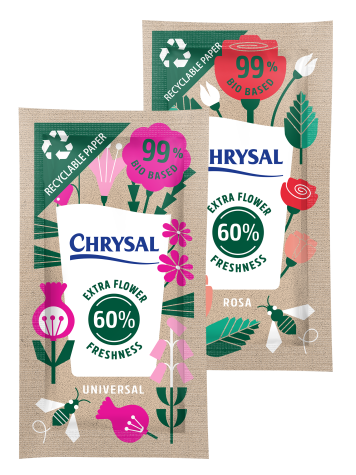
Chrysal Paper Sachet Flower Food – supports hydration, nourishes the flowers and can extend vase life by up to 60% compared to water alone.
Care tips for consumers
Use a clean glass vase
Cut 2–3 cm from the stem with a clean knife or secateurs
Use fresh water with flower food
Fill the vase with approximately half a litre of water
Keep flowers away from heat, draught and direct sunlight
📈 Benefits When Well Treated
Stronger stems and improved water uptake
Proper conditioning and hygiene prevent stem bending and maintain flower firmness.
Reduced contamination
Clean water and professional treatments protect Gerbera stems and improve longevity.
Longer vase life
Correct flower food and care routines significantly extend consumer enjoyment.
Less waste across the supply chain
Improved post-harvest performance leads to lower shrink at wholesale and florist level.
Reliable performance in bouquets and arrangements
Well-treated Gerberas maintain colour, shape and freshness for longer.
Recommended solutions
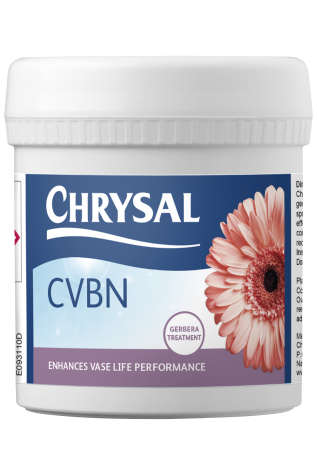
Chrysal CVBN

Chrysal Professional 2 Bag-in-box