How to Treat Roses After Dry Transport

Tjerk van der Schaaf

Roses that arrive after dry transport, such as sea container or post-container shipments, need careful and timely handling to restore hydration and safeguard quality. When the right steps are followed immediately after arrival, issues like bent neck, leaf wilting and reduced vase life can be significantly reduced. Below we outline the key principles for treating roses after dry transport, based on Chrysal’s official Codes of Practice.
Arrival and temperature control
Once the container or shipment arrives, it is essential to minimise exposure to uncontrolled conditions. Open the doors, remove and dispose of the plastic seal, and transfer the pallets as quickly as possible to a cold room.
Roses should be stored at 1–2 °C, with temperatures up to 3 °C still acceptable. Relative humidity should ideally be maintained between 70–90%. Before unpacking, check the temperature inside the boxes to confirm the cold chain has been maintained. Correct temperature management at this stage prevents condensation, stem damage and premature ageing.
Initial quality assessment
If a quality check is required, inspect several cultivars and boxes to obtain a representative picture. Key points to assess include:
- Leaf colour and freshness
- Signs of bent neck
- Leaf or petal damage
- Presence of Botrytis on flowers or stems
Any deviations should be documented, including an estimate of the percentage affected and supporting photos. Early identification allows appropriate follow-up actions to be taken.
Unpacking and rehydration
Dry-transported roses should ideally be unpacked on the day of arrival. If stored under excellent cold-store conditions, unpacking can be delayed for up to three days, but earlier processing is always preferable.
When unpacking, open the boxes and re-cut the stems by at least 2 cm to remove blocked tissue caused by dehydration. Immediately place the roses in clean buckets with cold, clean tap water.
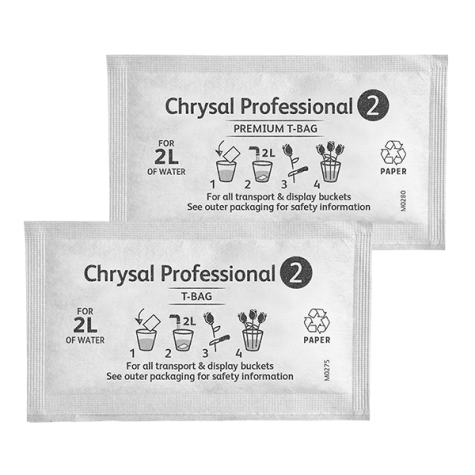
For effective rehydration, use a professional conditioning solution such as Chrysal RVB Clear Intensive, Chrysal RVB , Chrysal GROW 20 or Chrysal Professional 2, applied at the recommended dosage. Roses should remain in the hydrating solution for a minimum of four hours, and preferably longer, to fully restore turgidity and water uptake.
Buckets must be clean, with a minimum water height of 7 cm, ensuring all stems are fully submerged. Remove leaf and stem debris between batches to maintain hygiene and solution effectiveness.
Cold chain continuation
After rehydration, roses should be kept continuously within the cold chain. Storage and transport temperatures should remain between 2–5 °C, with stable humidity levels to prevent dehydration or condensation. Avoid storing or transporting roses together with ethylene-producing products such as fruit and vegetables, as roses are sensitive to ethylene exposure.
A strong restart after dry transport
Dry-transported roses can perform extremely well when rehydration, hygiene and temperature control are handled correctly. By restoring water uptake quickly and maintaining stable cold-chain conditions, roses regain firmness, show fewer quality issues and achieve a more reliable vase life further down the supply chain.
For tailored advice or support on post-transport rose handling, please contact us. Our teams are happy to help you optimise quality and reduce losses with practical, proven solutions.

Tjerk van der Schaaf
I have been working as a Senior Technical Consultant at Chrysal International for more than 36 years. I am responsible for some European countries, the Middle East and the Asia-Pacific region.
Do you want to get in touch? Please send me an e-mail!
FAQ – Treating Roses After Dry Transport
Why do roses need special treatment after dry transport?
During dry transport, roses are shipped without water to optimise logistics and reduce weight. However, this means the stems lose moisture and water uptake can be temporarily blocked. Proper rehydration and conditioning are therefore essential to restore firmness and ensure good vase life.
How quickly should dry-transported roses be unpacked?
Ideally, roses should be unpacked and rehydrated on the day of arrival. If the boxes are stored in a well-managed cold room (around 1–2 °C), unpacking can be delayed for up to three days, but earlier processing always gives the best results.
Why should stems be re-cut after dry transport?
Re-cutting at least 2 cm from the stem ends removes dehydrated or blocked tissue. This improves water uptake and allows the roses to hydrate properly during the conditioning stage.
How long should roses hydrate after dry transport?
Roses should hydrate in clean water with a professional conditioning solution for at least four hours, and preferably longer, to fully restore turgidity and support optimal performance.
What storage conditions are best after rehydration?
Roses should remain in the cold chain at 2–5 °C with a relative humidity of 70–90%. They should also be kept away from ethylene-producing products such as fruit and vegetables to prevent premature ageing.
Recommended solutions
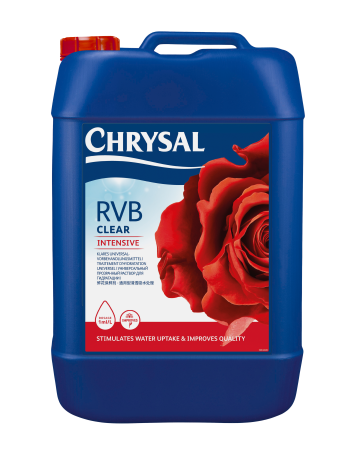
Chrysal RVB Clear Intensive
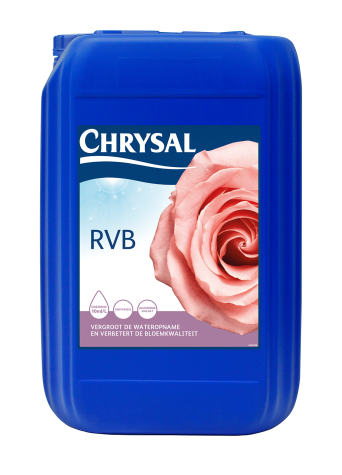
Chrysal RVB
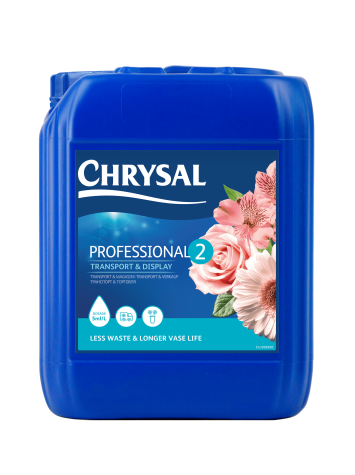
Chrysal Professional 2